Professional development workshop

Introducing elementary students to world climates through math

Köppen climate classification with grade-appropriate arithmetic

For
Elementary grades
Length
2 hours
Credit
2 CEUs
Price
$250-$350 depending on group size
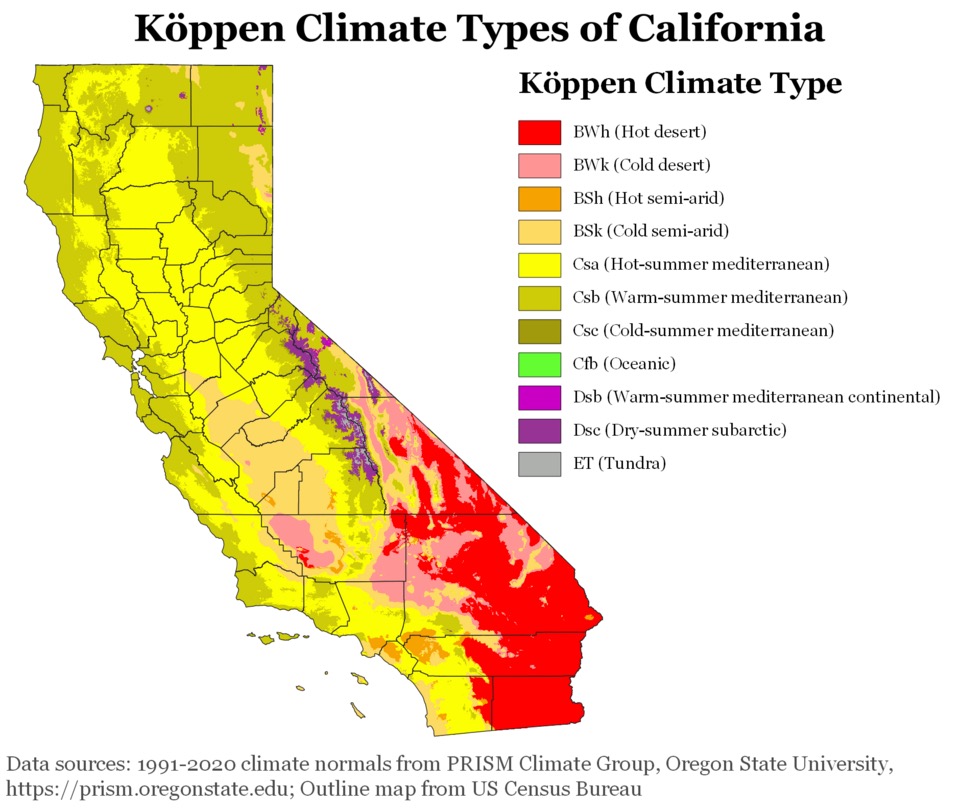
Map of California colored by Köppen climate type
Köppen climate types of California. Source: Adam Peterson, CC BY-SA 4.0, via Wikimedia Commons.

Vladimir Köppen, a Russian-German geographer, climatologist and botanist (1846-1940), was one of the first pioneers to tackle the very ambitious undertaking of creating a classification system to derive a number of distinct climate types across the world.

A sampling of those types is shown in the map above for the State of California, which, because of its very long geographic extent coupled with its location along the Pacific coast, has a wide range of climate types.

Science that is also math practice

In this workshop participants learn some of the nuts and bolts behind Köppen’s methods. They are also shown how their students can use climate data, in particular annual patterns of temperature and precipitation, to classify climates while using very grade-appropriate and simple math such as addition, averages, ranges and the addition of decimals.

Format

Two hours. 2 CEUs awarded, with hands-on activities distributed.

What participants take away

  • The nuts and bolts behind Köppen's climate classification
  • How students can classify climates from annual patterns of temperature and precipitation
  • A science lesson that doubles as math practice: addition, averages, ranges and adding decimals
  • Where to find climate data for places your students care about
  • Hands-on activities and 2 CEUs

Other workshops

Kindergarten, 3rd grade and middle school

Will it get too warm in the car for Lucky?

Why does a parked car get so hot? Teachers learn the greenhouse effect through an everyday example, then learn to calculate sun angle for any day of the year, anywhere on Earth.

Length
2 hours
Credit
2 CEUs / SCECHs
Standards
Weather and climate standards, K through middle school

Middle school

Why isn't the Equator the hottest place on Earth?

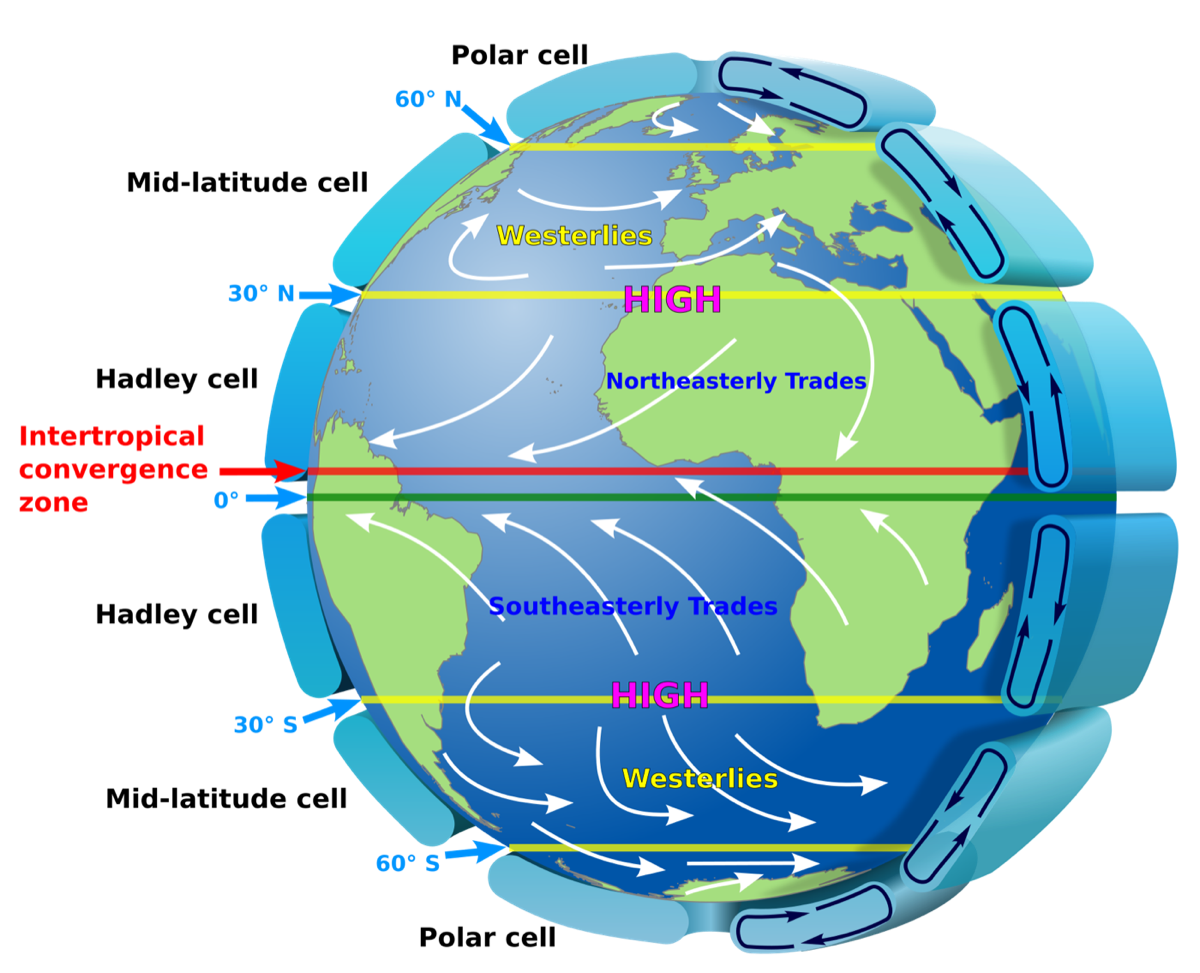
Probably the most important diagram in Earth science, explained so you can teach it. Uneven heating, Earth's rotation, and the global pattern of winds and pressure that shape regional climates.

Length
2 hours
Credit
2 CEUs / SCECHs
Standards
NGSS MS-ESS2-6

Middle school

Tornadoes in February? It's Michigan!

Much of the unpredictability of Michigan's weather is attributable to air masses. Teachers gain the content mastery to teach MS-ESS2-5, and get introduced to the real-time weather data sources that make it concrete.

Length
3 hours, with a 15-minute break
Credit
3 SCECHs
Standards
NGSS MS-ESS2-5 (Michigan)

Bring “Introducing elementary students to world climates through math” to your district

Workshops run two to three hours at a location you choose, and cost %!s(<nil>). Continuing education credits are awarded.