Professional development workshop

Will it get too warm in the car for Lucky?

An introduction to the greenhouse effect and sun angle

For
Kindergarten, 3rd grade and middle school
Length
2 hours
Credit
2 CEUs / SCECHs
Price
$250-$350 depending on group size
Lucky the dog looking out from the inside of a car
Lucky. Copyright © Amy Lilienfeld 2021.

According to the National Safety Transportation Board, when it is only 60 degrees F outside the inside of a car can become too warm for children or pets. The fact that temperatures inside a car can be so much higher than those outside is actually an illustration of the greenhouse effect.

The greenhouse effect refers to a process by which light energy passes through our atmosphere but, when it is converted into heat energy, gets trapped by greenhouse gases such as carbon dioxide. In a car, or a greenhouse, the same thing happens on a small scale. Light energy easily passes in through the glass, but the heat energy created inside gets trapped by the windows, raising the temperature inside the car.

As spring progresses into summer and average outside air temperatures continue to increase, the temperatures inside cars can rise so much that even very short periods of time in a car can pose significant danger to children or pets.

From a hot car to the seasons

This aspect of our seasonality is due primarily to increases in the height of the sun above the horizon, called sun angle. Sun angle is usually measured at noon, when the sun is highest in the sky that it will be all day.

In this workshop participants learn how to calculate sun angle for any day of the year for any place on Earth. This can be used to demonstrate not only the role of this important factor in temperature seasonality in the midlatitudes but also aspects of climate in other parts of the world.

Format

The workshop is two hours long at a desired location in your school district. Participants get packets of activity sheets for their use during the workshop as well as for implementing in their own classrooms. CEUs or SCECHs are awarded.

Pairs naturally with Why isn’t the Equator the hottest place on Earth?, which builds on the sun angle work.

What participants take away

  • A concrete, safety-relevant explanation of the greenhouse effect that works from kindergarten up
  • How to calculate sun angle for any day of the year for any place on Earth
  • Why sun angle drives temperature seasonality in the midlatitudes
  • How the same idea explains aspects of climate in other parts of the world
  • Packets of activity sheets to use during the workshop and in your own classroom
  • 2 CEUs or SCECHs

Other workshops

Middle school

Why isn't the Equator the hottest place on Earth?

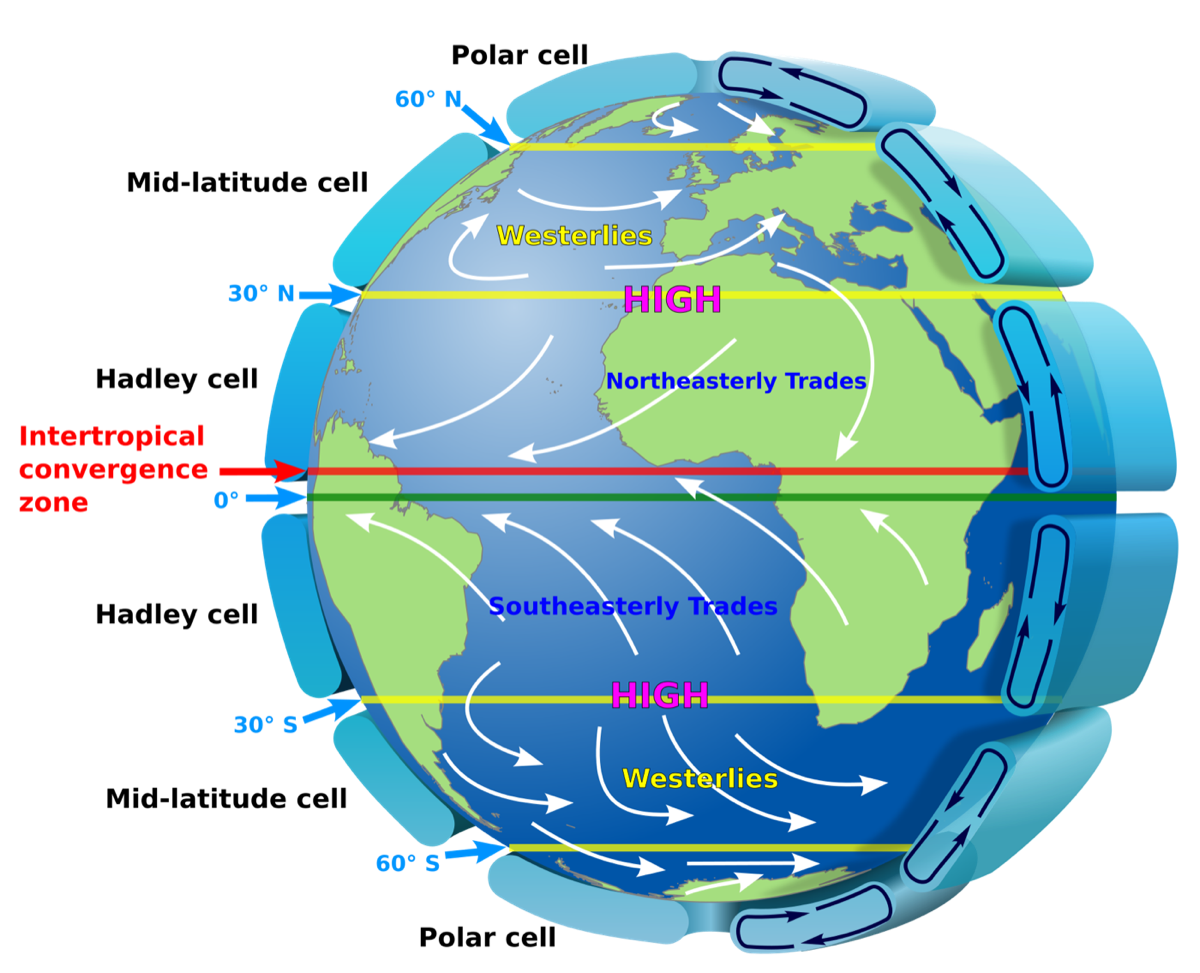
Probably the most important diagram in Earth science, explained so you can teach it. Uneven heating, Earth's rotation, and the global pattern of winds and pressure that shape regional climates.

Length
2 hours
Credit
2 CEUs / SCECHs
Standards
NGSS MS-ESS2-6

Middle school

Tornadoes in February? It's Michigan!

Much of the unpredictability of Michigan's weather is attributable to air masses. Teachers gain the content mastery to teach MS-ESS2-5, and get introduced to the real-time weather data sources that make it concrete.

Length
3 hours, with a 15-minute break
Credit
3 SCECHs
Standards
NGSS MS-ESS2-5 (Michigan)

Elementary grades

Introducing elementary students to world climates through math

Students classify the world's climates using annual temperature and precipitation data and nothing more than addition, averages, ranges and decimals. Teachers learn the method behind Köppen's system and how to run it in class.

Length
2 hours
Credit
2 CEUs
Standards
Elementary weather and climate standards, with math integration

Bring “Will it get too warm in the car for Lucky?” to your district

Workshops run two to three hours at a location you choose, and cost %!s(<nil>). Continuing education credits are awarded.